Hi everyone! I hope you’re all well. It’s Friday, and it’s time for another review. This week, I’m sharing my review of Bonnie Bryant Hiller’s novelisation of the 1990 film Teenage Mutant Ninja Turtles.
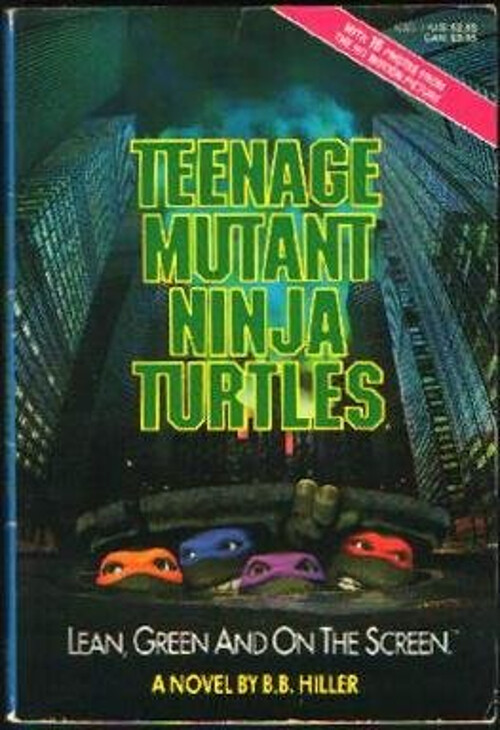
Teenage Mutant Ninja Turtles was published in 1990 by Dell Publishing 1990 and is 92 pages long.
The Plot
The story opens in New York City, where a wave of mysterious thefts and crime has the police baffled, and investigative reporter April O’Neil is drawn into danger. When she is attacked by masked thieves, she is rescued by unseen vigilantes—later revealed to be the four mutant turtles.
Characters
Leonardo
As the leader of the Turtles, Leonardo is steady, disciplined, and often carries the burden of responsibility. He serves as a balance to Raphael’s impetuousness, holding the group together in moments of crisis. In the book, Leonardo is the one who most often thinks of strategy and maintaining team cohesion.
Raphael
Raphael is the hothead and the most emotionally volatile of his brothers. He is quick to anger and impatient with caution, which sometimes puts him at odds with his brothers and Splinter. The novel emphasises his frustration at being constrained by secrecy and rules. His impulses lead to one or two dangerous confrontations that show both his strengths and his recklessness.
Donatello
The intellectual and tinkerer of the group, Donatello, is thoughtful and reflective, often providing technical insight or a rational perspective when conflicts arise. In the narrative, he functions as a mediator and voice of reason. His inventiveness is implied more than shown (since the action sequences dominate); however, his calm intelligence is present in their interactions.
Michelangelo
Michelangelo is the easygoing, lighthearted spirit among the Turtles. He provides comic relief, levity, and is the more carefree member, though he is no less brave. In the novel, his quips and sense of fun help offset the darker moments. His loyalty and courage shine through, even if he is less burdened by leadership or guilt.
Splinter
Splinter is the Turtles’ mentor and de facto father figure. In the novel, his backstory is only sketched: once the pet rat of Hamato Yoshi, he observed Yoshi’s mastery of ninjutsu and later took on the role of teacher after mutating. His guiding presence provides moral grounding, and his voice is one of calm dignity. The plot’s tension often hinges on his capture, and his relationship with the Turtles is central to their motivation.
April O’Neil
April is a human journalist drawn into the mystery of the Foot Clan and the turtles’ secret. In the novel, she is curious, persistent, somewhat headstrong, and morally earnest. Her viewpoint gives the reader an external window into the mutant world. Hiller gives her a degree of internal deliberation—her fear, surprise, and determination—even as she remains a somewhat reactive character.
Charles Pennington
Charles is April’s boss at Channel 3 News and Danny’s father. He is, in the novel, a more peripheral figure who is primarily concerned with the reputation of his news outlet, his son’s behaviour, and managing the pressures April places on the network. He becomes part of the tension concerning the exposure of the turtles and the Foot’s crimes, but is not deeply characterised.
Danny Pennington
Danny is Charles Pennington’s teenage son, a troubled youth who becomes entangled with the Foot Clan’s schemes. He is tempted and manipulated, reflecting themes of alienation, misguided purpose, and redemption. The novel provides him just enough internal conflict to make his choices plausible, though not deeply explored.
The Shredder
As the primary antagonist, Shredder is a menacing presence, the head of the Foot Clan and a schemer behind the crime wave. In the novel, he is less humanised—he is the villainous mastermind, with occasional hints of his rivalry or history with Hamato Yoshi. His plan and schemes drive much of the conflict.
Tatsu & Foot Clan Henchmen
Tatsu is the Shredder’s lieutenant and enforcer; the Foot Clan members are the ninja soldiers who carry out his bidding. They are less individually distinguished, but their martial arts encounters, ambushes, and skirmishes are the source of action and peril. In the novelisation, Hiller uses them as obstacles and tension-builders rather than character studies.
Writing Style
Hiller’s prose is clean, quick, and easy to follow. It’s aimed squarely at a younger audience, with straightforward sentence structures and little in the way of literary flourish. That simplicity works in the book’s favour during fight scenes or comic banter—though it also makes the emotional beats feel underpowered. The novel never really delves into the brothers’inner lives or the strangeness of their situation; it’s more of a surface retelling—all plot and dialogue with minimal texture.
There are small glimpses of added interiority—for example, we get a little more of Raphael’s internal conflict and April’ssense of wonder at the turtles—but these moments are fleeting.
The main drawback of this book is the lack of further development. I love it when a novelisation takes the story of a film and adds to it while keeping the main story points throughout. However, this one doesn’t expand on the mythology or add new perspectives that could enrich the story.
Final Thoughts
Teenage Mutant Ninja Turtles is a quick and faithful retelling that succeeds in recreating the film’s energy but doesn’t add much else to it. Readers who already know the story will find a familiar and nostalgic read; however, newcomers may struggle to connect deeply with its thin characterisation and sparse prose.
I’m giving Teenage Mutant Ninja Turtles a 5/10.
Have you read this one? What did you think?
Thank you, as ever, for stopping by to read my review!
Until next time,
George
© 2026 GLT
Categories: Book Reviews, Reading
 GEORGE L THOMAS
Leave a comment