
Hi everyone! I hope you’re all well. Today is Friday, and it’s time for another review. Today, I’m sharing my review of Peter Lerangis’ novelisation of the film, The Sixth Sense.
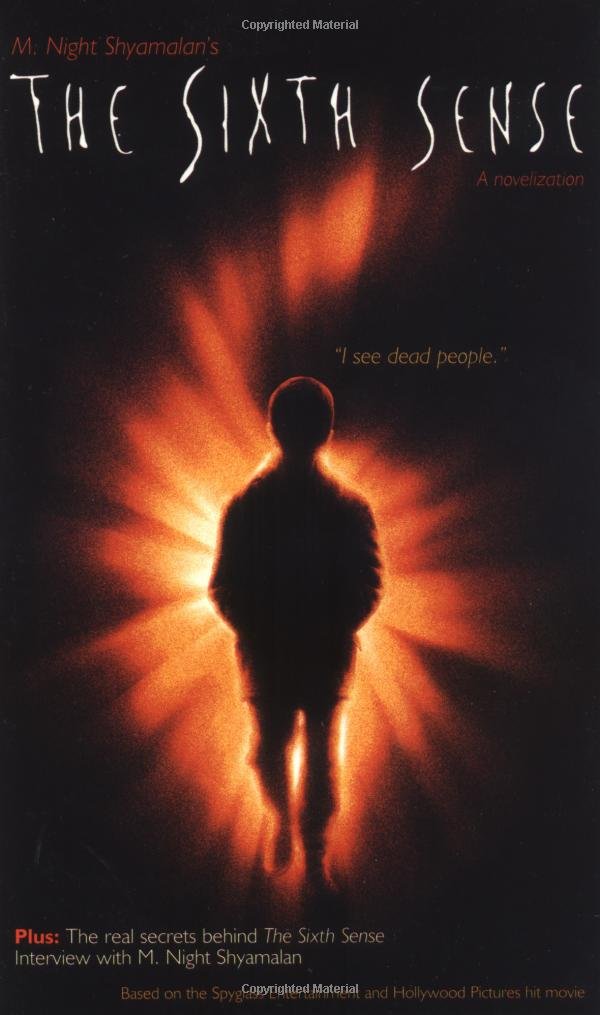
The Sixth Sense was published in 2000 by Scholastic and is 208 pages long.
The Plot
Based on the 1999 supernatural thriller written and directed by M. Night Shyamalan, the story follows child psychologist Dr Malcolm Crowe. Early in the story, Malcolm is shot by a disturbed former patient whose treatment he believes he failed.
Months later, Malcolm takes on a new case: a quiet, troubled boy named Cole Sear. Cole displays intense fear and strange behaviour, which his mother struggles to understand. As Malcolm tries to help him, Cole reveals a terrifying secret—he can see and communicate with ghosts.
The spirits that appear to Cole are often confused, angry, or unaware that they are dead. Malcolm encourages Cole to listen to them rather than fear them, suggesting they may merely need help resolving unfinished business.
As the boy gradually learns to face his ability, Malcolm’s own life begins to unravel. His marriage to his wife, Anna, seems distant and strained, leaving him increasingly isolated.
All of this builds toward the famous twist about Malcolm himself and what’s really been going on since the opening shooting. The novelisation preserves that reveal, structuring the narrative to lead to the same final jolt as the film—although the shock inevitably lands a little softer on the page, especially if you already know the ending.
Characters
Malcolm Crowe
Malcolm is the novel’s emotional anchor: a respected child psychologist who’s quietly crumbling inside. Lerangis leans into his guilt and obsession, giving us a glimpse of some interiority that the film only implies—his need to “get it right this time,” his confusion over Anna’s distance, his rational mind straining against what Cole is telling him.
He’s sympathetic and melancholy, but on the page he can also feel slightly remote; the cool, clinical tone of the narration mirrors his own detachment, which fits the character but sometimes keeps the reader at arm’s length.
Cole Sear
Cole is the heart of the story. Sensitive, lonely, and frightened, he carries the burden of seeing ghosts that no one else can see.
His famous confession—“I see dead people”—reveals the terrifying world he lives in. Over the course of the story, Cole transforms from a terrified child into someone who begins to understand his ability and even uses it to help others.
Lynn Sear
Cole’s mother, Lynn, is a loving but exhausted parent trying to raise her son alone. She worries that something is deeply wrong with Cole, but cannot understand what he is experiencing.
Her relationship with him becomes one of the story’s most emotional elements, particularly as she struggles between fear, frustration, and unconditional love.
Anna Crowe
Anna is Malcolm’s wife, whose distant behaviour confuses and frustrates him throughout the story. Their strained relationship comprises a subplot that ultimately becomes central to the film’s twist.
Though she appears only intermittently, Anna’s presence is essential to understanding Malcolm’s emotional journey.
Writing Style
Peter Lerangis writes in a clear, straightforward style that prioritises accessibility over stylistic flourish. Like many film novelisations, the prose largely mirrors the film’s structure and dialogue rather than expanding dramatically on the material.
There are some modest advantages to the format:
As I mentioned earlier, the novel offers us brief glimpses into characters’ internal thoughts, particularly Malcolm’sreflections and Cole’s fears.
However, the writing rarely rises above functional storytelling. Much of the narrative feels like a scene-by-scene retelling of the movie rather than a fully realised novel in its own right. Readers familiar with the film will recognise nearly every beat, sometimes almost line for line.
Atmosphere and tension—which the film achieves through visuals, pacing, and music—are harder to replicate on the page. As a result, some of the story’s eerier moments feel less intense than their cinematic counterparts.
Final Thoughts
Overall, Lerangis delivers a faithful, readable version of The Sixth Sense. It’s a pleasant companion for fans of the film, offering a few small character insights—yet it struggles to recapture the hushed, skin-tightening unease that made the movie iconic.
The result is serviceable rather than stirring—an enjoyable curiosity, but not a ghost story that lingers long after the book is closed.
I’m giving this one a 5/10.
Have you read this novelisation? How do you think it compares to the film?
As ever, thanks for stopping by and reading my review!
Until next time,
George
© 2026 GLT
Categories: Book Reviews, Reading


Leave a Reply