Hi everyone! It’s somehow Friday again, and it’s time for another review. Today I am reviewing the sequel to the brilliant The Handmaid’s Tale, The Testaments by Margaret Atwood.
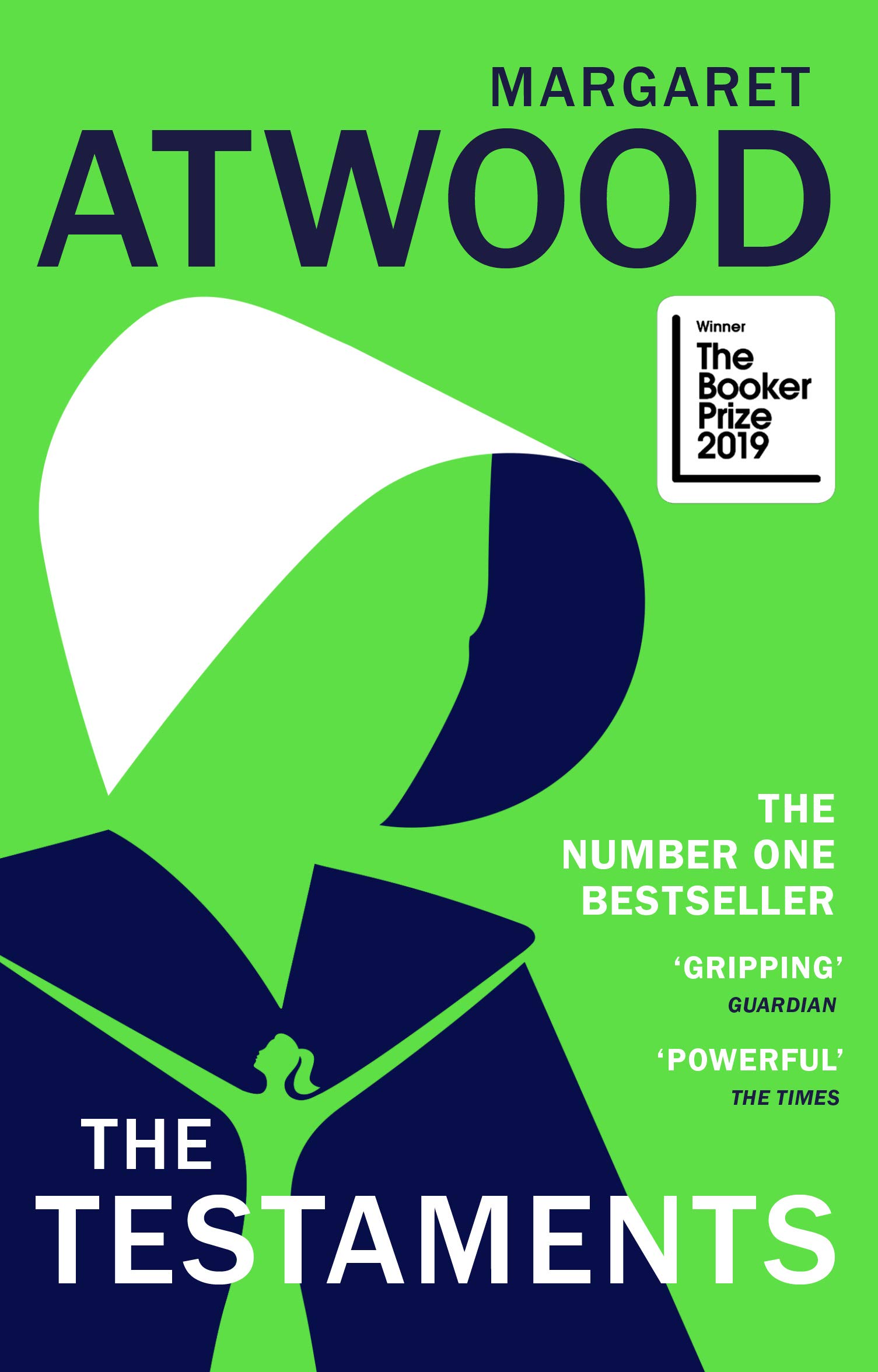
The Testaments by Margaret Atwood was first published in 2019 by McClelland & Stewart and (my copy) is 378 pages long.
Plot
The Testaments by Margaret Atwood is a captivating and thought-provoking novel that provides a compelling continuation of the story that began in The Handmaid’s Tale. Set fifteen years after the first novel, The Testaments features the perspectives of three different women connected to the oppressive world of Gilead.
Characters
Aunt Lydia
Aunt Lydia’s storyline was by far my favourite aspect of this book. We see her as more of a human being with her own hopes and fears rather than just the one-dimensional character she was in The Handmaid’s Tale.
In The Handmaid’s Tale, Lydia is a high-ranking “Aunt” in the oppressive Gilead. In The Testaments, we learn how she rose to power within the regime, using her intelligence, cunning, and resourcefulness to manipulate Gilead’s leaders and shape its policies.
We also learn how she started working with the Mayday resistance group, passing them incriminating information on Gilead’s Commanders.
She is a complex character who is both feared and revered in Gilead. In The Testaments, Atwood explores the motivations behind Lydia’s decisions, making her character more nuanced and three-dimensional. She is characterised as both ruthless and sympathetic as she struggles to survive and protect her own interests while grappling with the guilt of her past actions and attempting to preserve her position of power. I won’t say any more about Lydia’s actions because her character arc is one of the main reasons to read The Testaments, and I don’t want to ruin it.
Agnes Jemima
Agnes grows up in Gilead, initially believing herself to be the biological daughter of Commander Kyle and his wife, Tabitha. When Tabitha dies, her father remarries a woman named Paula, who wants Agnes out of the house. To that end, Paula arranges for the Aunts to find Agnes a marriage match, and they come up with three, none of which appeal to Agnes. Her parents, however, want her to marry the more powerful of the three, Comander Judd.
Before the wedding can happen, though, Aunt Lydia offers Agnes the chance to become an Aunt instead of being married off. Agness accepts and spends years in training, eventually becoming a Supplicant (an Aunt under probation) and taking the name Victoria.
Whilst living with the Aunts in Ardua Hall, Agness learns that a lot of what they have been taught about the bible growing up has been lies, or at the very least, the bible stories have been twisted.
Later, Agnes begins to receive folders full of secret evidence of the wrongdoings of Gilead’s leaders, leading her to conclude that the seemingly pious government is corrupt. Also, from these files, she discovers who her biological mother was and that she also had another child called Nicole.
Agnes’ character development is gradual and subtle, and we see her grow ever more disillusioned with Gilead as the novel progresses. I really liked Agness. After reading The Handmaid’s Tale, where most of the women, except for the protagonist Handmaid, were ruled by fear and quick to be subservient, it was refreshing to have a character question – even if only to herself – what was happening around her.
Daisy
Daisy is a young woman living in Canada whose life is upended when her parents die in a car bombing. Afterwards, she meets a group of Mayday resistance fighters who tell her she has a connection to Gilead; she was adopted and is, in fact, Baby Nicole, an infant smuggled out of Gilead.
After learning of her true identity, the Mayday resistance convinces her to help them infiltrate Gilead and retrieve some incriminating documents from an anonymous, though high-ranking source.
Making it into Gilead, Daisy joins Ardua Hall, where she lives with Agnes and Becka, another Aunt in training. At first, neither Agnes nor Becka like Daisy very much, with Agness believing her to be an untidy roommate. They also dislike the fact that she has a tattoo.
One day, Daisy is summoned to speak with Aunt Lydia, who admits to her that she is, in fact, the high-ranking source who has been contacting the Mayday group. She implants a microdot of information beneath one of the letters in Daisy’s tattoo.
When Agnes and Becka find Daisy in Aunt Lydia’s office, she tells them that Daisy is Baby Nicole. Agness realises that Daisy is her sister. She also admits that she is the one who has been supplying them with the folders of secret information.
With Aunt Lydia’s help, Agnes and Daisy leave Gilead under the pretence of doing missionary work. After an arduous journey in which Daisy almost dies of an infection in her tattooed arm, they both make it safely to Canada.
Throughout the novel, these three women struggle with their roles and identities while navigating complex relationships and power dynamics within Gilead. We also see how their lives impact one another and how their actions and decisions have far-reaching consequences.
Writing Style
The writing in The Testaments is nothing short of brilliant, with Atwood demonstrating her mastery of pacing, dialogue, and character development. Her prose is both lyrical and sharp, and she knows just when to ratchet up the tension and when to deliver an emotional gut punch. She also manages to switch seamlessly between the three protagonist’s points of view without leaving you with whiplash, something that’s hard to do.
As she did in The Handmaid’s Tale, Atwood excels in creating a dystopian world that feels both terrifyingly real and oddly familiar. Her characters are complex and nuanced, and their struggles (both internal and external) are engaging and meaningful.
Honestly, I think the novel is a masterclass in storytelling.
Final Thoughts
The Testaments is a relevant, timely, and thought-provoking novel that continues to push the feminist narrative forward. Margaret Atwood’s vivid imagination and seamless writing style make for an exciting read that will leave the reader reeling but still, I think, fulfilled by the end.
The Testaments is an excellent sequel that is certain to appeal to fans of The Handmaid’s Tale or to any fans of dystopian fiction. It is also a great stand-alone book for readers new to Atwood’s work. So, if you’re looking for a thought-provoking read, I highly recommend picking up a copy.
I am giving The Testaments a 9/10.
Have you read The Testaments? What do you think of Margaret Atwood as a writer? Let me know your thoughts.
As ever, thanks for stopping by to read my review. It really means a lot.
Until next time,
George
© 2023 GLT
Categories: Book Reviews, Reading


I have yet to read this story, but from your glowing review, I should get to it sooner rather than later!
LikeLiked by 1 person
I was a little wary at first because sometimes a sequel can sort of ruin the experience of the first book, but on this occasion, I was pleasantly surprised. 🙂
LikeLiked by 1 person
Very often, sequels read like an after thought. Glad this wasn’t the case this time, George… 📚
LikeLiked by 1 person