
Hi everyone! I hope you’re all well. Today is Friday, and it’s time for another review. This week, I’m sharing my review of the short horror story The Voice in the Night by William Hope Hodgson.
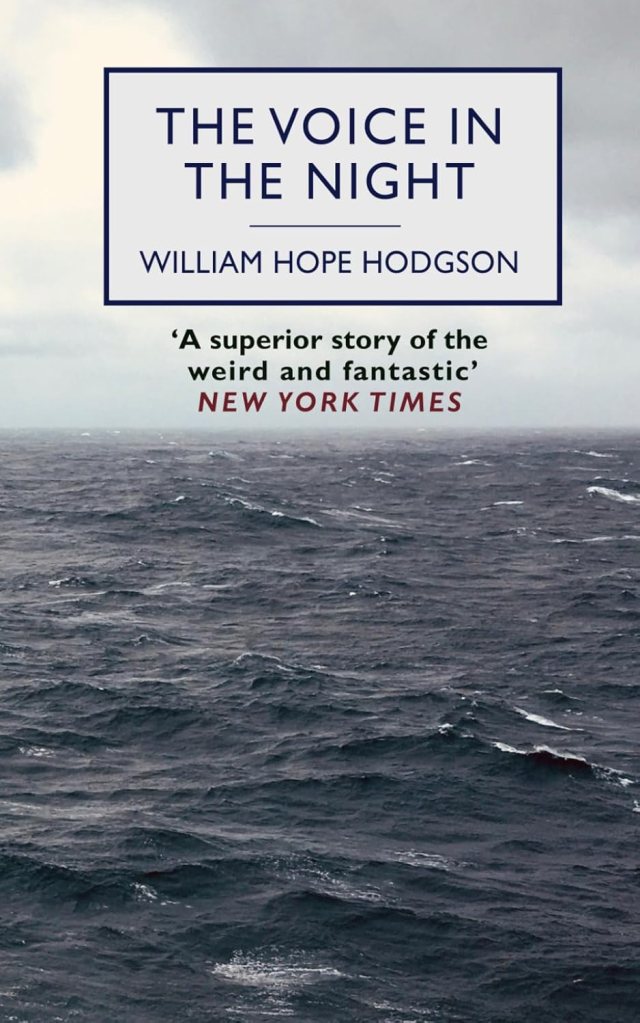
The Voice in the Night was published in 1907 in Blue Book Magazine and is 12 pages long.
The Plot
One foggy evening, the crew of a small cargo ship encounters a mysterious rowboat approaching from the mist. A man within it refuses to come into the ship’s light or reveal himself, but begs for food.
Throughout the conversation, the man recounts a harrowing tale of shipwreck, survival, and transformation. He and his fiancée were stranded on a seemingly deserted island after their vessel foundered. However, the island was overrun by a strange, creeping fungus—one that slowly, inexorably, began to grow on them.
Characters
The narrator
An unnamed sailor on the schooner recounts events in the first person. He’s practical and sceptical, but never cruel; his voice gives the tale a matter-of-fact tone that makes the encroaching weirdness feel more believable. His limited perspective also heightens the mystery – we only ever see the stranger in snatches, in the dark or in dim dawn light.
Will
Will is the schooner’s master and the narrator’s friend. We mostly glimpse him through dialogue and brief reactions. He serves as a sounding board and a second “normal” viewpoint, giving the frame sections a sense of everyday shipboard routine that contrasts with the stranger’s nightmare.
The man in the rowboat
The man in the rowboat is the central figure of the tale, though he never gets a name. He begins as a disembodied voice in the water and gradually becomes a tragic, almost confessional presence. Hodgson gives him a mix of shame, decency and desperation: he’s horrified by what he has become, terrified of contaminating others, but still focused on getting food for his fiancée. His choice to stay away from the schooner, even though he’s starving, casts him as both victim and moral agent.
The fiancée
The fiancée is also unnamed, and we only know her through the man in the boat who recounts their story. We hear about her reactions – her gratitude for the food, her decline, her own struggle with the urge to eat the fungus – but she never speaks directly in the frame narrative.
Writing Style
Hodgson’s prose is controlled, atmospheric, and carefully suggestive. He avoids explicit description of the fungus, allowing the reader’s own imagined imagery to fill the gaps. The result is an unease that lingers rather than peaks.
Hodgson structures the short as a story-within-a-story: calm, realistic shipboard scenes frame the stranger’s flashback. This old-fashioned device works beautifully here. The repeated return to the dark sea surface, the sound of the unseen boat, and the voice drifting out of the fog build tension while keeping the horror just out of reach.
What makes the story particularly effective is its level of empathy. The transformed man is not a monster but a victim, and Hodgson lingers on his psychological suffering rather than his physical state. The result is a story that unsettles not through shock, but through a slow dawning sense of hopelessness.
Final Thoughts
The Voice in the Night is a haunting, melancholic tale of transformation, isolation, and the terror of slow decay—and while not a rollercoaster, it’s a masterfully eerie boat ride through fog and fungus—a must-read for fans of quiet horror and classic weird tales.
I’m giving The Voice in the Night an 8/10.
Have you read this short? What did you think?
As ever, thank you for stopping and reading my review!
Until next time,
George
© 2026 GLT
Categories: Book Reviews, Reading


Leave a Reply