Hi everyone! I hope you’re all well. Today I’m exploring the difference between the words ‘which’ and ‘that’. So, without any further ado, let’s jump in.
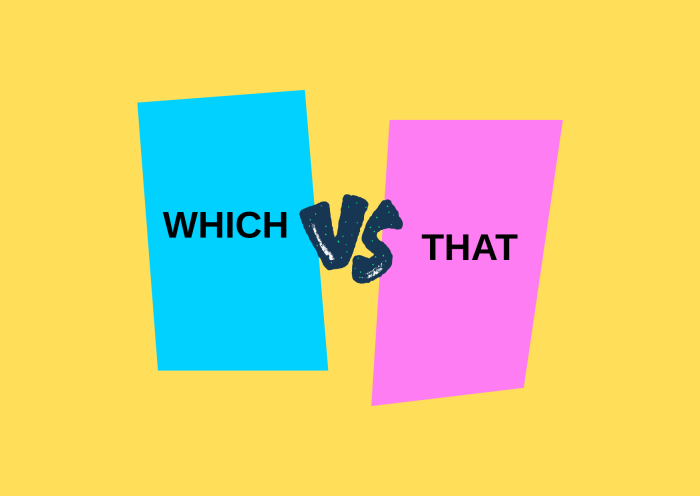
‘Which’ vs ‘That’
Many writers use “which” and “that” interchangeably, on instinct, and get away with it most of the time. But the words aren’t really interchangeable — there’s a real distinction underneath.
It comes down to whether you actually need the extra piece of the sentence — the clause — or you’re just adding detail.
“That” introduces a clause you need. It’s identifying which thing you’re talking about out of more than one possible option. For example, take the sentence: the manuscript that George submitted last week needs a structural edit. “That George submitted last week” is telling you which manuscript — presumably out of several he’s working on. Take that clause out, and the sentence still makes sense; it just means something different. It’s no longer specific to one manuscript.
“Which” introduces a clause you don’t need — some extra bits of detail, tacked on, that you could remove without changing what the sentence is actually saying. The manuscript, which George submitted last week, needs a structural edit. Here, there’s just one manuscript being discussed. “Which George submitted last week” is just adding when it arrived. Cut it, and the core meaning of the sentence doesn’t change at all.
The commas are doing actual work here, and aren’t just decoration. You’ll have noticed they showed up around “which George submitted last week” but not around “that George submitted last week” — that’s not incidental. A “which” clause almost always gets set off with commas, because it’s an aside — you’re stepping out of the main sentence to add something, then stepping back in. A “that” clause doesn’t need commas, because it’s not an aside. It’s part of the sentence’s core meaning, not an addition to it.
This actually matters for clarity, and not just correctness. The house that burned down was insured. The house, which burned down, was insured. In the first, there’s more than one house, and this is the one that burned down. In the second, there’s one house; it happened to burn down, and by the way, it was insured — the burning down is incidental to the point being made, which is about the insurance. Swap them, and you’ve changed the facts of the sentence without meaning to.
If you’re not sure which one a sentence needs, try the removal test. Take the clause out. If the sentence now means something different — if it’s no longer clear which thing you’re talking about — put “that” back in, no commas. If the sentence still means exactly what it meant before, minus a bit of detail, use “which,” with commas.
It’s also worth remembering that English doesn’t enforce this as a hard rule so much as a useful distinction. American English holds it fairly strictly. British English is looser, and you’ll see “which” used for essential clauses all the time in published British writing without anyone blinking.
Either way, it’s less a grammar rule you’re breaking and more a tool for controlling exactly what you want your sentence to convey — useful even if nobody’s going to correct you for getting it “wrong.”
Do you struggle with using ‘which’ and ‘that’?
As ever, thank you for stopping by!
Until next time,
George
© 2026 GLT
Categories: English Language, Tips for Better Grammar, Writing Tips


Leave a Reply