Hi everyone! I hope you’re all well. Today is Friday, and it’s time for another review. This week, I’m reviewing Wes Craven’s New Nightmare, the novelisation of the film of the same name, by David Bergantino.
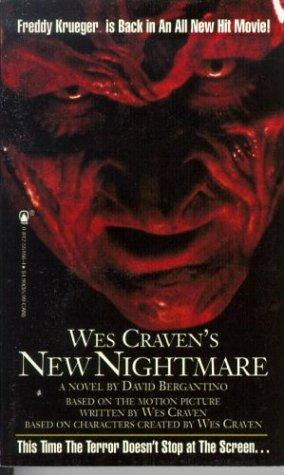
New Nightmare was unleashed upon the world by Tor Books in 1994 and is 216 pages long.
The Plot
The book centres around Heather Langenkamp, the actress highly regarded for her role as Nancy Thompson in several of the Nightmare on Elm Street films. Unlike the slasher premise of the earlier films, this one cleverly blurs the line between fiction and reality.
Here, reality begins to imitate the nightmare when a sinister and almost godlike Freddy Krueger transcends the boundaries of film to haunt Heather in her real life. Heather is forced to confront Freddy—not as Nancy in a film set, but as herself in her very real Los Angeles home. The stakes are no longer bound to script pages; Freddy’s resurgence threatens not only Heather but also her young son, Dylan.
Characters
Heather
Heather is a fictional version of herself. She is portrayed as both courageous and vulnerable as she struggles with the terrifying resurgence of Freddy Krueger into her reality, with her maternal instinct to protect her son fueling her bravery. The book lets us step directly into her shoes, allowing us to feel her exhaustion, her fear, and her clawing guilt as she tries to juggle the demands of parenting a traumatised child with the creeping realisation that Freddy Krueger might be back in a more terrifying form.
Dylan
Dylan, Heather’s son, is given so much more agency in the novelisation. While he was a critical piece of the puzzle on-screen, here, Dylan becomes the beating heart of the story. Bergantino does a lovely job of capturing the eeriness of his behaviour while also making him a deeply sympathetic character. Dylan’s innocence contrasts starkly with Freddy’smalevolence, heightening the tension throughout.
Robert England
Englund also appears as himself, illustrating the duality between his real-life persona and his iconic role as Freddy, emphasising the blurring lines between fiction and reality.
Freddy
Reimagined darker and more menacingly than in previous iterations, Freddy Krueger remains the twisted, gleeful villain we all know, but with a few added flourishes. The novel expands on his role not just as a slasher but as an avatar for deeply seated fears. You feel his ominous presence growing page by page like a shadow you can’t quite shake, which, honestly, makes him even scarier than in some of the later films. He’s less of a crude caricature and more of a genuine nightmare in this version, emoting with terror rather than cheesy one-liners.
Wes Craven
Wes Craven makes an appearance as a character in both the film and the book, and the metafictional aspect of his role works just as effectively in writing. It’s always fun when the creator of a universe steps into their own narrative—but here, it gains an almost prophetic weight as Wes explains the existential stakes of Freddy’s resurgence.
Chase Porter
Heather’s husband, Chase, is depicted as supportive yet sceptical about the supernatural occurrences. His practical and grounded perspective contrasts sharply with Heather’s growing fears, adding tension to their dynamic.
John Saxon
John Saxon is a comforting presence and a paternal figure to Heather, echoing his role as her father in the original film. His character symbolises stability amidst the chaos, further complicating the lines between fiction and reality.
Writing Style
If there’s a word that summarises David Bergantino’s writing, it’s immersive. The novelisation does justice to the tense, surreal tone of the New Nightmare film while bringing a richness that only comes from well-constructed prose. He builds upon Wes Craven’s idea of Freddy as an entity more ancient and evil than we previously believed—and there’s something so satisfying about lifting Freddy out of mere campy horror territory and back into a realm of dread, where he exists as a concept of fear itself.
One thing I particularly enjoyed was how Bergantino incorporated more psychological depth than what we see on screen. He allows readers into Heather’s mind at key moments, adding layers of fear, doubt, and fragile resilience that feel painfully real. Her horror isn’t just about Freddy’s claws; it’s about her internal struggle as a mother, an actress, and a person stuck between two realities.
Another strength here is the pacing. The novel builds momentum quickly, capturing your attention early and holding it throughout. Even if you’ve already watched the movie multiple times, the story doesn’t feel redundant or predictable. Instead, it gives you a fresh experience, revealing new angles and insights to savour.
With all that said, there are moments when the novel’s meta-nature might feel slightly shoehorned in compared to the fluidity of the film, particularly the author’s “journal” entries. However, it doesn’t lessen the overall effect of the narrative.
Final Thoughts
Overall, Bergantino delivers a compelling and immersive narrative, expanding upon Craven’s visionary approach to horror and offering readers a thought-provoking experience of terror that resonates long after the final page.
If you’re looking for something a little bit different in the realm of horror fiction, give this one a try—but you might want to sleep with the lights on when you’ve finished reading.
I’m giving New Nightmare an 8/10.
Have you read this novelisation? Does it compare well to the film?
Thank you, as ever, for stopping by to read my review.
Until next time,
George
© 2025 GLT
Categories: Book Reviews, Reading
 GEORGE L THOMAS
Leave a comment