Hi everyone! How are you all? Today, I am exploring the concept of cliffhangers and how and why we use them in our stories. So, without further preamble, let’s get started!
What is a Cliffhanger?
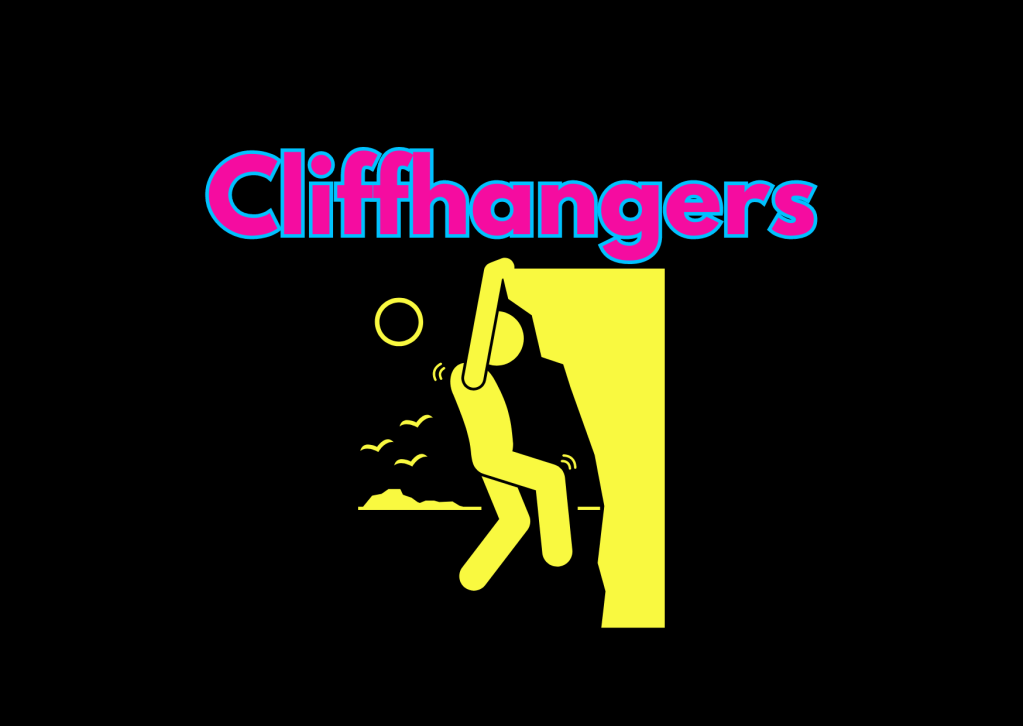
A cliffhanger is a literary device that leaves readers unsure of what will happen in the next chapter. The term comes from the idea of a character hanging off a cliff, leaving readers wondering whether or not they will survive.
Why UIse Cliffhangers?
One of the key advantages of using cliffhangers is that they create suspense and tension, making the audience all the more invested in your story and more likely to continue turning pages to find out if your character survives, gets married, wins the lottery, etc.
Cliffhangers can also help to create memorable characters. When a reader arrives at a cliffhanger, they are often left thinking about the characters and their motivations, making them more invested in their arc; this can be especially useful when writing a series or trilogy, as cliffhangers can help to build anticipation for the next book.
Another reason cliffhangers are effective is their ability to create emotional engagement with your readers. When you end a chapter on a cliffhanger, it can trigger an emotional response in your reader – whether that response is excitement, fear, anticipation, or shock; this emotional investment motivates readers to keep reading to resolve the suspense and satisfy their curiosity. Harnessing these emotions through well-thought-out cliffhangers will make your stories more impactful and memorable.
How To Use Cliffhangers Effectively
There are several approaches that writers can use to create effective cliffhangers. One is to end a chapter with some kind of mystery that leaves the reader with a question. Another is to leave a character in a precarious predicament so the reader is left wondering whether they will survive.
Twists are another great way to utilise a cliffhanger; revealing a shocking twist or revelation that changes the character’s journey or sends the story off in an entirely new direction can leave the audience eager to know more.
It’s important to remember, too, that not all cliffhangers have to be dramatic or action-packed; often, subtle hints or quiet moments of reflection can be just as effective in keeping a reader’s attention.
Of course, like any tool, cliffhangers can be overused. If every chapter ends on a cliffhanger, it can feel manipulative, gimmicky and exhausting for the reader. However, used strategically and sparingly, cliffhangers can be a powerful way to craft a brilliant story and keep readers engaged.
Overall, cliffhangers can be an excellent tool for writers looking to keep their readers reading, but crafting a good cliffhanger takes work and practice. Learning about the different types of cliffhangers and how to use them effectively will only help to improve your storytelling ability, which can only be a good thing.
Thank you, as always, for stopping by to read my post. It means a lot!
Until next time,
George
© 2024 GLT
Categories: Outlines, Writing Tips
 GEORGE L THOMAS
Leave a comment