
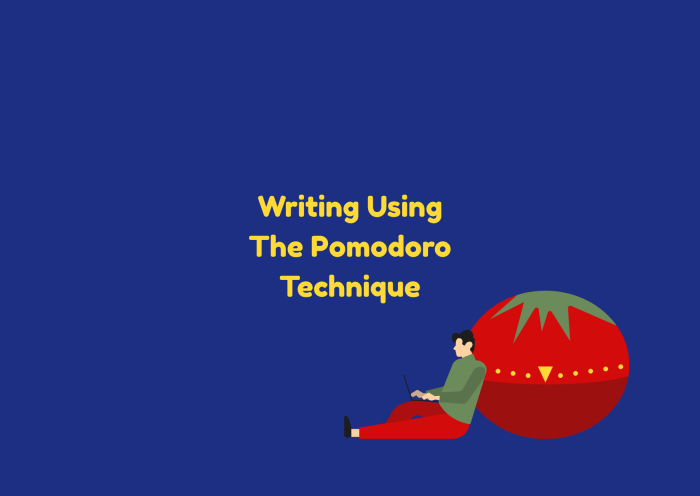
Hi everyone! I hope you’re all well. Today, I’m exploring The Pomodoro Technique, and in particular, its value to writers.
So, without further preamble, let’s dive in!
Writing Using The Pomodoro Technique
We writers love a bit of drama.
We love the thunderbolt of inspiration. The candlelit marathon. The myth of the tortured genius who writes for fourteen hours straight, fuelled by coffee and unresolved feelings.
The brain, however, prefers tomatoes.
Not real ones, unless you love munching on a tomato while you write… No, I mean metaphorical ones.
Let’s talk about the Pomodoro Technique.
What is the Pomodoro Technique?
The Pomodoro Technique is a deceptively simple productivity method devised in the 1980s by Francesco Cirillo. He used a tomato-shaped kitchen timer (pomodoro is Italian for tomato), and accidentally gave the modern world one of its most useful cognitive hacks.
So, What’s the Big Idea?
Well, it really is a simple one: you work for 25 minutes, then you stop for 5 minutes. After you’ve done this four times, you take a longer break.
That’s it. I told you—simple.
It sounds almost insultingly so, doesn’t it? But writing is less about cleverness and talent and more about energy and time management.
The Pomodoro Technique is a good one because it works with how our attention spans function.
We wish we could concentrate uninterrupted for hours, churning out magnificent sentences—but alas, our brains are not a Victorian factory. They’re more like golden retrievers. They’ll chase the stick if you make the throw short enough.
Why Pomodoro Works for Writers
Writing is cognitively expensive. You are holding plot, language, character psychology, sensory detail, and emotional truth in your working memory. That’s a lot of spinning plates.
Studies show that sustained focus drains mental resources. Short sprints reduce resistance. When you tell yourself, “Just 25 minutes,” your brain doesn’t panic because you’ve removed the intensity.
And here’s the sneaky brilliance: once you’ve started, momentum often builds and carries you past the timer, which, I’dhasten to add, isn’t a prison. Think of it more as a doorway to your creativity.
How to Use Pomodoro Specifically for Writing
Okay. Let’s make this practical.
Start by defining your task before the timer begins. For instance, “Work some more on my novel” is rather vague, whereas“Plot a tense exchange between characters A and B” is more specific. Specificity helps you to see the task as a whole, manageable chunk.
When you begin the 25 minutes:
Don’t allow yourself to edit old chapters.
Don’t check your email.
Stay away from Google (make a note of what you need ot research and do it later).
Don’t mess with your font or text size. Just write.
If you hit a snag, leave a bracketed note and keep moving, for example:
[Research 17th-century keelmen tools later]
[Better metaphor needed]
[Find a better way to describe this]
Momentum matters more than making sure your words are perfect—at least for now. You merely need to get words on the page.
During your 5-minute break:
Stand up. Move around. Drink some water. Stare out the window like a brooding 19th-century poet if that helps. Just don’t open social media unless you enjoy donating your brain to the algorithm.
After you’ve done four sessions, give yourself a longer break. That’s when your subconscious mind starts stitching things together. Many plot solutions appear during the “off” period. The brain loves background processing.
Remember, the Pomodoro Technique won’t magically make you love every minute of writing. You’ll still have resistant days, grumpy days, and “who wrote this trashworthy draft?” days.
But what it does give you is a way to start when you don’t feel like writing and a structure that helps promote focus.
And you don’t have to use it forever, nor do you need to use it perfectly. It’s a helpful little exercise in motivation and productivity, not law.
Anyway, I hope you’ve found this helpful!
Until next time,
George
© 2026 GLT
Categories: Writing Exercises, Writing Tips
 GEORGE L THOMAS
Leave a comment