Hi everyone! I hope you’re all well. Today is Friday, and it’s time for another review. Today, I am reviewing Ira Levin’s The Stepford Wives.
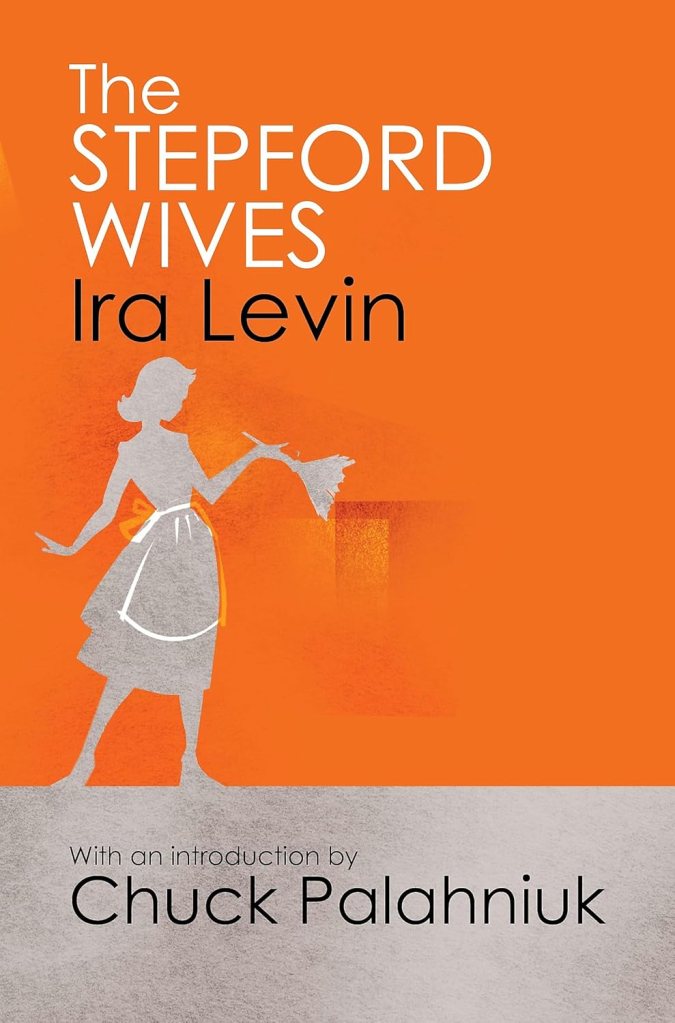
The Stepford Wives was published in 1972 by Random House and is 145 pages long.
The Plot
The story follows Joanna Eberhart, a spirited and independent photographer, as she moves with her family to the suburban town of Stepford. At first glance, Stepford seems perfect—a picturesque haven of well-kept homes and friendly neighbours. However, Joanna begins to notice something odd about the town’s women. They are unnervingly subservient, obsessed with domestic perfection, and devoid of ambition or individuality.
Characters
Joanna Eberhart
Joanna is the protagonist. She’s independent, witty, and driven, yet she feels vulnerable in the new and strange environment of Stepford. She is a photographer with ambitious plans, thrives on creativity and values her individuality. But moving to Stepford with her husband and children starts to chip away at her sense of self. Joanna is disturbed by the eerie perfection of the town’s other wives and their obsession with domesticity.
Joanna’s scepticism and growing paranoia drive the narrative, making her a relatable and sympathetic figure. Her ultimate fate underscores the novel’s critique of systemic oppression and the fragility of individuality in the face of societal pressure.
Walter Eberhart
Walter is Joanna’s husband and is the one who initiates their family’s move to Stepford. At first, Walter seems supportive and progressive, sharing the housework and encouraging Joanna’s career. However, his willingness to conform to the male-dominated culture of Stepford reveals a more sinister side. Walter’s complicity in the overall plot showcases how easily some men can justify oppressive systems for their own benefit. He’s an unsettling figure because of how ordinary he appears—and how devastating his choices become.
Bobbie Markowe
Bobbie is Joanna’s closest friend and is a breath of fresh air in Stepford. With a sharp tongue, a great sense of humour and a rebellious streak, Bobbie refuses to buy into the Stepford wives’ stereotypical homemaker routines. Her eventual transformation from a vibrant, outspoken ally into a docile, submissive “perfect wife” serves as the main turning point of the novel, shattering Joanna’s hopes and amplifying her fears. Bobbie’s arc is one of the most devastating in the story, representing the erasure of individuality in the pursuit of perfection and an idealized version of the domestic archetype.
Charmaine Wemperis
Charmaine is an early friend of Joanna’s and is all for being anything other than a stereotypical “housewife”. She is independent and sure of herself, having no interest in men—and that goes for her husband, too, explaining to Joanna that she dreads spending a week away with him. It is after this week away that Charmaine changes.
The Stepford Wives
The Stepford wives are a chilling collective of seemingly flawless women who define perfection in the most hollow way. They are devoted to their husbands and obsessed with keeping their homes spotless and their appearances impeccable. But beneath the surface lies the novel’s dark secret—these women, once vibrant individuals, have been changed and made submissive.
Carol Van Sant
Carol is one of the titular Stepford wives, the embodiment of polished perfection. Like the other wives in Stepford, she is beautiful, docile, and unnervingly devoted to housework. Carol’s robotic demeanour and the eerie uniformity among the wives become the central mystery for Joanna—an emblematic representation of the ultimate loss of agency and autonomy.
Ruthanne Hendry
Ruthanne is an author of children’s books featuring independent girls. She wants to change the way young girls view themselves. Upon moving to Stepford just after Joanna, Ruthanne begins to think the strange behaviour of the townsfolk is directed at her because hers is Stepford’s first family of colour. However, after speaking with Joanna, she realizes that the women in town treat everyone the same way.
Ruthanne “becomes” Joanna in the final chapter as her story arc begins to follow the same pattern as her character.
Writing Style
Levin’s prose is deceptively simple, marked by an economical use of words and a refusal to over-explain. This sparseness reflects Stepford’s sterile, almost too-perfect atmosphere, mirroring the eerie emptiness beneath the town’s seemingly idyllic surface.
His dialogue is written in a way that comes across as natural and is often laden with subtext, revealing the characters’ personalities and the tensions simmering beneath their interactions.
A particular highlight is the pacing. The gradual unravelling of Stepford’s sinister reality mirrors the protagonist Joanna’s journey, pulling readers deeper into a mystery where every detail feels charged with meaning. Levin leaves a lot unsaid, trusting readers to piece together the horror for themselves, making the final revelations chilling.
One minute criticism I have is that I found the book lacking depth regarding the motivations of the male characters. The men of Stepford, while undeniably seeking to control the women, remain, for the most part, one-dimensional, representing a singular force of patriarchy rather than fully fleshed-out people. But, this may be a deliberate choice by Levin to emphasize the broader societal critique, especially at the time the book was written.
Final Thoughts
Overall, The Stepford Wives is a masterpiece of suspense and social critique. Most of the characters, particularly Joanna, are crafted with depth and nuance, drawing readers into the story and making the horror of Stepford all the more impactful.
Levin’s exploration of gender roles and conformity remains so relevant today, making The Stepford Wives a compelling read as well as a powerful commentary on societal expectations that lingers long after the final page. I couldn’t help thinking about how so much and yet so little has changed in society. Maybe one day we’ll allow people to exist for who they are instead of who society, en masse thinks they ought to be.
I am giving The Stepford Wives an 8/10.
Have you read The Stepford Wives? Have you seen any of the film adaptations? How do you think it compares?
Thank you, as ever, for stopping by to read my review.
Until next time,
George
© 2025 GLT
Categories: Book Reviews, Reading
 GEORGE L THOMAS
Leave a comment