
Hi everyone! I hope you’re all well. Today is Friday, and it’s time for another review. Today, I’m reviewing Gerald Durrell’s Memoir, My Family and Other Animals.
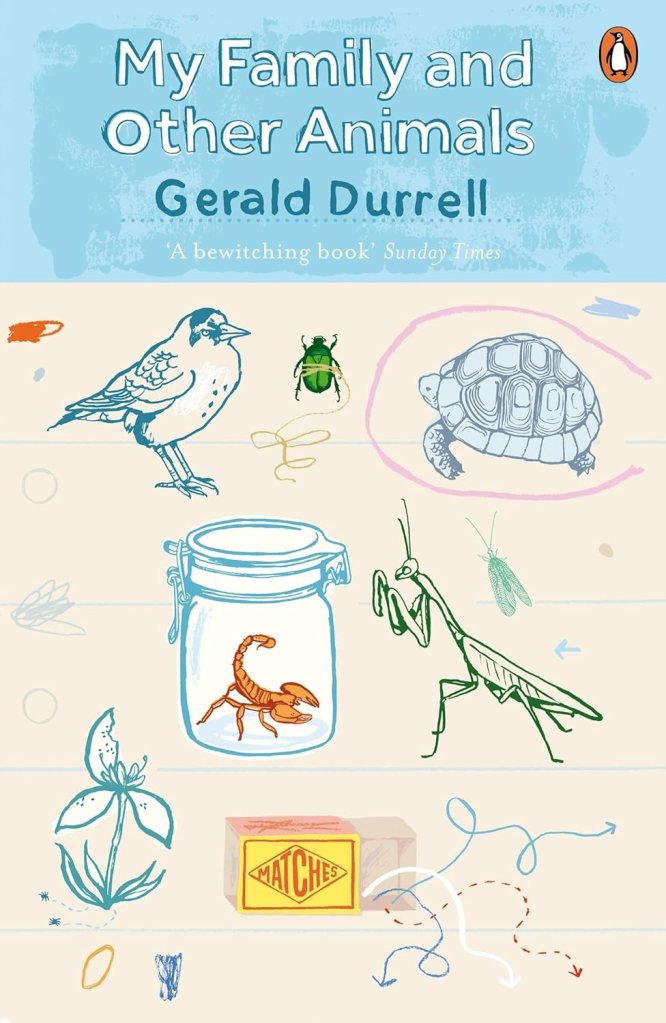
My Family and Other Animals was initially released in 1956. It is 300 pages long and was published by Rupert Hart-Davis.
The Plot
This memoir by the renowned naturalist and conservationist Gerald Durrell recounts his childhood experiences growing up on the Greek island of Corfu in the 1930s. The book is a joyful blend of family comedy and natural history, chronicling both his love of the island’s wildlife and the antics of his eccentric family.
Characters
Gerald Durrell
Gerald, the protagonist and narrator of the story, is a ten-year-old boy who is passionate about animals and the natural world. He is portrayed as curious, whimsical, adventurous, and resourceful, with a keen sense of observation and a natural affinity for all kinds of creatures.
Louisa Durrell
Louisa is the mother of the family. She is described as caring, supportive, and patient. After her husband’s death, she moves to the island of Corfu with her children to create a new life. She is the glue that holds the family together, striving to create a harmonious, relaxed environment for her children, despite the constant upheavals and eccentricities around her.
Lawrence Durrell
Lawrence, Louisa’s eldest son, is an aspiring author with lofty ambitions. He’s sarcastic, self-important, and frequently clashes with the rest of the family over his desire for peace and quiet to write, though ironically, his demands often create even more chaos.
Leslie Durrell
Leslie is the second oldest of Louisa’s children. He is rugged, practical, and outdoorsy, with a strong interest in guns, hunting, and boating. He spends most of his time exploring Corfu’s wild landscapes and engaging with the locals.
Margo Durrell
Margo is Louisa Durrell’s only daughter. She is a teen, preoccupied with beauty and health trends, and experiments with various treatments. She has a flair for drama, but also shows a caring and supportive nature, especially toward her mother and younger brother.
Dr. Theodore Stephanides
Dr. Stephanides, a biologist, becomes a mentor to Gerald. Gentle, intellectual, and endlessly patient, he is one of the few adults who takes Gerald’s passion for nature seriously and treats him as an equal.
Spiro Halikiopoulos
Spiro is a Greek man who quickly becomes a close friend of the Durrell family. He’s a key ally in their new life on Corfu. He helps them with transportation, legal issues, and local bureaucracy. His colourful personality, strong Greek accent, broken English, and fiery temper add a rich dose of humour and warmth to the story.
Writing Style
Told from the perspective of Durrell’s ten-year-old self, the prose captures a unique blend of childlike wonder and adult wit. Durrell’s style is richly descriptive yet never heavy; he paints the natural world with lyrical detail, often giving animals distinct personalities that make them feel as vivid as any human character. His ability to combine scientific fascination with the tone of a storyteller allows even those unfamiliar with zoology to be drawn into his world.
One of the most distinctive features of Durrell’s writing is his comedic timing and affectionate exaggeration of character. The Durrell family is portrayed with an almost theatrical sense of absurdity, but always with genuine affection. Larry is the insufferable intellectual, Margo the melodramatic teenager, and their mother the calm eye of the storm. These exaggerated portraits are used to comic effect, without ever becoming cruel or unkind.
The only aspect I found a little overdone was the presentation of Corfu as an almost perfect paradise, even though political tensions in the region were rising during the 1930s. However, since the book is told through the eyes of a ten-year-old, this idealised view makes sense—it reflects a child’s perception of freedom, wonder, and escape from grey old England.
There are also occasional instances of dated language or stereotyping that would be seen as problematic today. However, they were considered acceptable at the time of publication. These moments are infrequent and generally not mean-spirited. Even so, they are worth acknowledging in a modern reading.
Final Thoughts
This is not a perfect book. However, if you can overlook those few imperfections, it is a pleasant, heartwarming, and immersive read. It’s a celebration of childhood, nature, family, and humour, with an atmosphere so vividly rendered that you can almost feel the Corfiot sun on your face.
Whether you’re a nature lover, a family person, or simply a fan of good storytelling, this is a book that is sure to delight and entertain.
I am giving My Family and Other Animals a 7/10.
Have you read this one? If you have, did you enjoy it?
Thank you, as ever, for stopping by to read my review!
Until next time,
George
© 2026 GLT
Categories: Book Reviews, Reading
 GEORGE L THOMAS
Leave a comment